
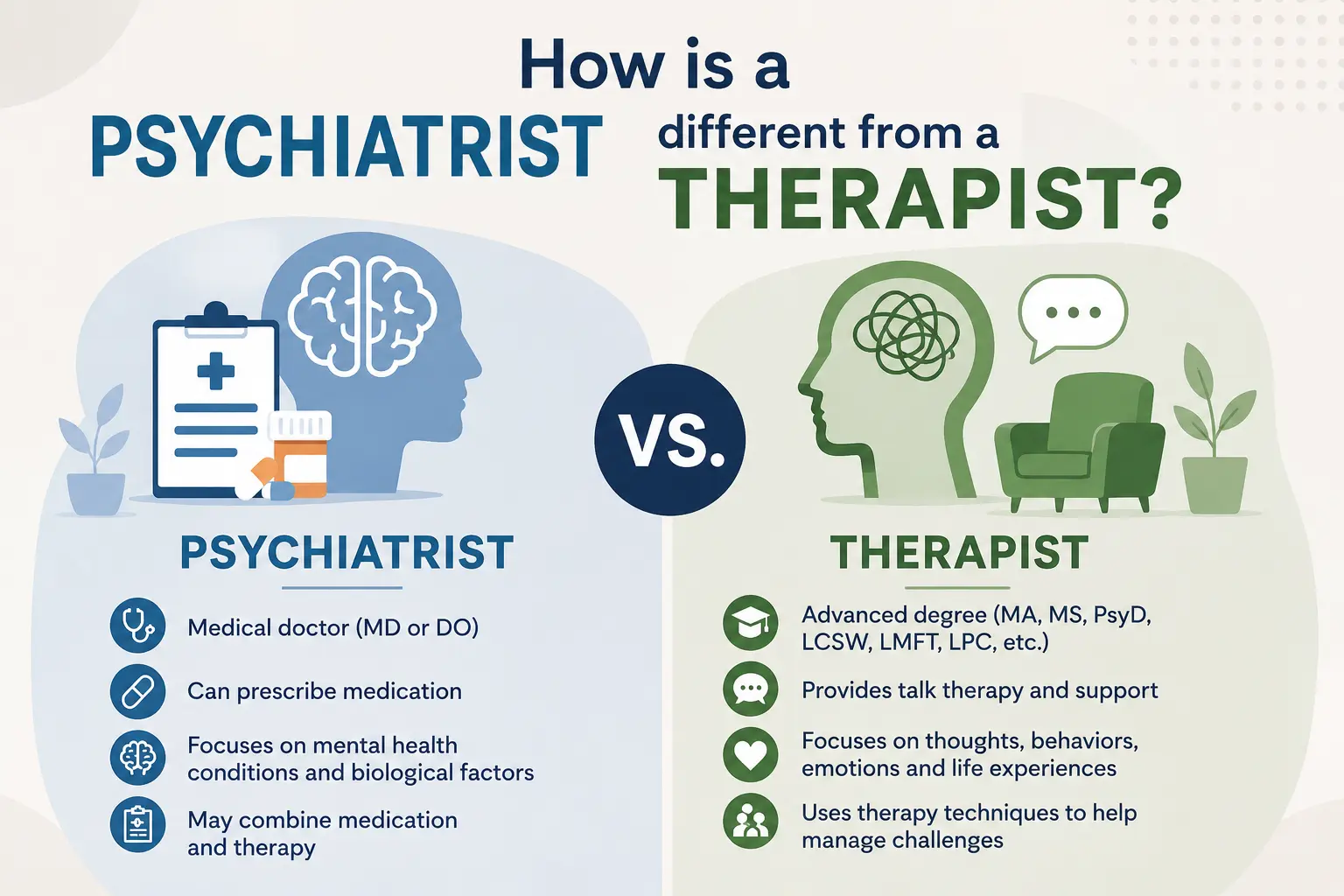
How is a psychiatrist different from a therapist?
When people begin looking for mental health support, one of the most common questions they ask is:
“Should I see a therapist or a psychiatrist?”
For many individuals, the answer is not always clear. Some people are struggling with anxiety, depression, stress, ADHD symptoms, emotional burnout, or relationship difficulties, but are unsure what type of support they actually need. Others may feel nervous about medication or uncertain about what happens during psychiatry or therapy appointments.
At Armstrong Family Counseling, we understand that beginning mental health care can feel overwhelming, especially for individuals reaching out for support for the first time.
Understanding the difference between a psychiatrist and a therapist can help people make more informed and confident decisions about their mental health care. In many cases, individuals benefit from both psychiatry and therapy working together as part of a more personalized treatment plan.
Because Armstrong Family Counseling offers integrated psychiatry and counseling services within one practice, clients can access more connected and collaborative support based on their specific emotional and mental health needs.
What Does a Psychiatrist Do?
A psychiatrist is a medical provider who specializes in evaluating, diagnosing, and treating mental health conditions.
Psychiatry services often focus on:
- mental health evaluations,
- symptom management,
- medication support,
- and ongoing treatment planning.
Individuals may seek psychiatric support for concerns such as:
- anxiety,
- depression,
- panic attacks,
- ADHD,
- mood disorders,
- trauma-related symptoms,
- or emotional instability that affects daily life.
One of the biggest differences between psychiatrists and therapists is that psychiatrists can prescribe and manage medications when appropriate.
At Armstrong Family Counseling, psychiatric care is approached as part of a larger picture of emotional wellness rather than simply treating symptoms in isolation. Medication management is personalized based on each client’s experiences, goals, and overall mental health needs.
What Does a Therapist Do?
Therapists help individuals explore emotional challenges, behavior patterns, stressors, relationships, and coping strategies through talk therapy and emotional support.
People often seek therapy for:
- anxiety and stress,
- relationship difficulties,
- trauma recovery,
- life transitions,
- grief,
- emotional overwhelm,
- parenting challenges,
- or difficulty coping with daily responsibilities.
Therapy creates space for individuals to better understand themselves, process difficult experiences, and build healthier emotional and behavioral patterns over time.
At Armstrong Family Counseling, therapy is designed to feel collaborative, supportive, and personalized to each client’s life experiences and emotional goals.
The Main Difference Between a Psychiatrist and a Therapist
While both psychiatrists and therapists support mental health, their roles are different.
Psychiatry often focuses more on:
- diagnosis,
- symptom stabilization,
- and medication management.
Therapy focuses more on:
- emotional processing,
- coping skills,
- relationship dynamics,
- communication,
- and long-term behavioral growth.
A psychiatrist may help someone manage severe anxiety symptoms through medication support, while a therapist helps that same person identify stress triggers, improve coping tools, and navigate emotional challenges in daily life.
Rather than replacing each other, therapy and psychiatry often work best together.
Can You See a Psychiatrist and Therapist at the Same Time?
Yes, and for many people, this combination provides the strongest overall support.
At Armstrong Family Counseling, we believe mental health care works best when emotional and medical support are connected rather than separated across multiple providers.
For example:
- Someone experiencing panic attacks may benefit from medication support to reduce physical symptoms while also working with a therapist to rebuild confidence and manage anxiety triggers.
- while an adult with ADHD may use psychiatric support for medication management alongside therapy focused on organization, communication, and emotional regulation.
When psychiatry and therapy work together, treatment often feels more collaborative, personalized, and effective over time.
Because Armstrong Family Counseling offers both services within one practice, clients can experience more coordinated care instead of navigating separate offices and disconnected treatment plans.
When Should You Consider Seeing a Psychiatrist?
Individuals may benefit from psychiatric support if:
- anxiety or depression significantly affects daily life,
- emotional symptoms continue worsening,
- panic attacks occur regularly,
- concentration difficulties interfere with work or school,
- Sleep problems become difficult to manage,
- or previous therapy alone has not fully relieved symptoms.
Some people also seek psychiatric support when they want to explore whether medication may help improve emotional stability and daily functioning.
At Armstrong Family Counseling, psychiatry services are personalized to each individual’s needs rather than following a one-size-fits-all approach.
When Should You Consider Seeing a Therapist?
Therapy may be helpful for individuals who want support managing:
- stress,
- anxiety,
- relationship challenges,
- emotional overwhelm,
- trauma,
- grief,
- parenting concerns,
- or difficult life transitions.
Many people benefit from therapy even when symptoms are not severe. In fact, therapy can help individuals build emotional resilience, improve communication, and strengthen coping skills before challenges become overwhelming.
At Armstrong Family Counseling, therapy focuses on helping individuals feel understood, supported, and empowered throughout the healing process.
Why Many People Choose Armstrong Family Counseling for Integrated Mental Health Care
Many people searching for mental health support are not simply looking for medication or therapy alone. They are looking for care that feels:
- compassionate,
- personalized,
- connected,
- and supportive over time.
At Armstrong Family Counseling, we understand that mental health challenges affect every part of life, including relationships, parenting, work, school, stress levels, and emotional well-being.
Our integrated care model allows psychiatry and therapy services to work together more collaboratively when appropriate for the client’s needs.
Rather than treating symptoms in isolation, we focus on helping individuals feel heard, supported, and actively involved in treatment decisions.
Many clients throughout Kansas City and Overland Park appreciate having access to both psychiatry and counseling services within one practice because care feels more streamlined, connected, and personalized.
Mental Health Support Should Feel Personalized
There is no single “right” path when it comes to mental health treatment.
Some individuals benefit most from therapy alone. Others may need psychiatric support and medication management. Many people benefit from a combination of both.
The most important thing is finding support that aligns with your emotional needs, treatment goals, and daily challenges.
At Armstrong Family Counseling, our goal is to help individuals feel supported without judgment while creating treatment plans that are tailored to each person’s experiences and long-term wellness goals.
Conclusion
Understanding the difference between a psychiatrist and a therapist can help individuals make more informed decisions about their mental health care.
While psychiatry often focuses on medication management and symptom stabilization, therapy helps individuals process emotions, improve coping skills, and create long-term behavioral change.
At Armstrong Family Counseling, we believe these services often work best together. By offering integrated psychiatry and counseling services within one practice, we help individuals and families throughout Kansas City and Overland Park access more connected and personalized mental health support.
